
 Français
 Why Ultrasound Training is Essential for the Marine Industry
A “Quality Ship”, that is the dream of every owner, manager, and sailor.
It’s a vessel that not only sails safely but delivers its precious cargo on time and in perfect condition. Yet, the reality often tells a different story: billions of dollars lost annually to claims, often tracing back to seemingly small failures in secondary equipment, like leaking hatch covers or a faulty pump.
The problem? Most critical maintenance efforts focus heavily on main engines and large rotating machinery, leaving a critical blind spot for the smaller systems essential to cargo integrity and vessel efficiency. This leaves many ships unknowingly sailing toward a mechanical accident or cargo damage claim.
The SDT-IMCS Ultrasound Marine Power User Training introduces marine professionals to a powerful partner: ultrasound.
Hearing what can’t be seen
Imagine a time before water testing was the standard for checking cargo holds. Walter Vervloesem, a marine surveyor and former seagoing officer, pioneered the use of ultrasound for tightness testing in the 1990s. This shift led to a drastic drop in cargo claims for one major user, from 75% down to just 0.6%. More than a new innovative way of doing things, that change was about finally being able to hear the leak that water couldn’t easily pinpoint.
Ultrasound is uniquely sensitive to the hidden faults inside machinery, the signs of Friction, Impacts, and Turbulence (FIT).
- It can hear a bearing defect in its earliest stage, long before vibration analysis sounds the alarm, preventing catastrophic failure.
- It can listen through a closed valve and tell you if liquid or gas is “passing,” saving energy and protecting your system.
- It can pilot your lubrication process, ensuring you give a bearing precisely “how much” grease it needs, preventing the “deadly” outcome of over- or under-lubrication.
A strategy for every asset
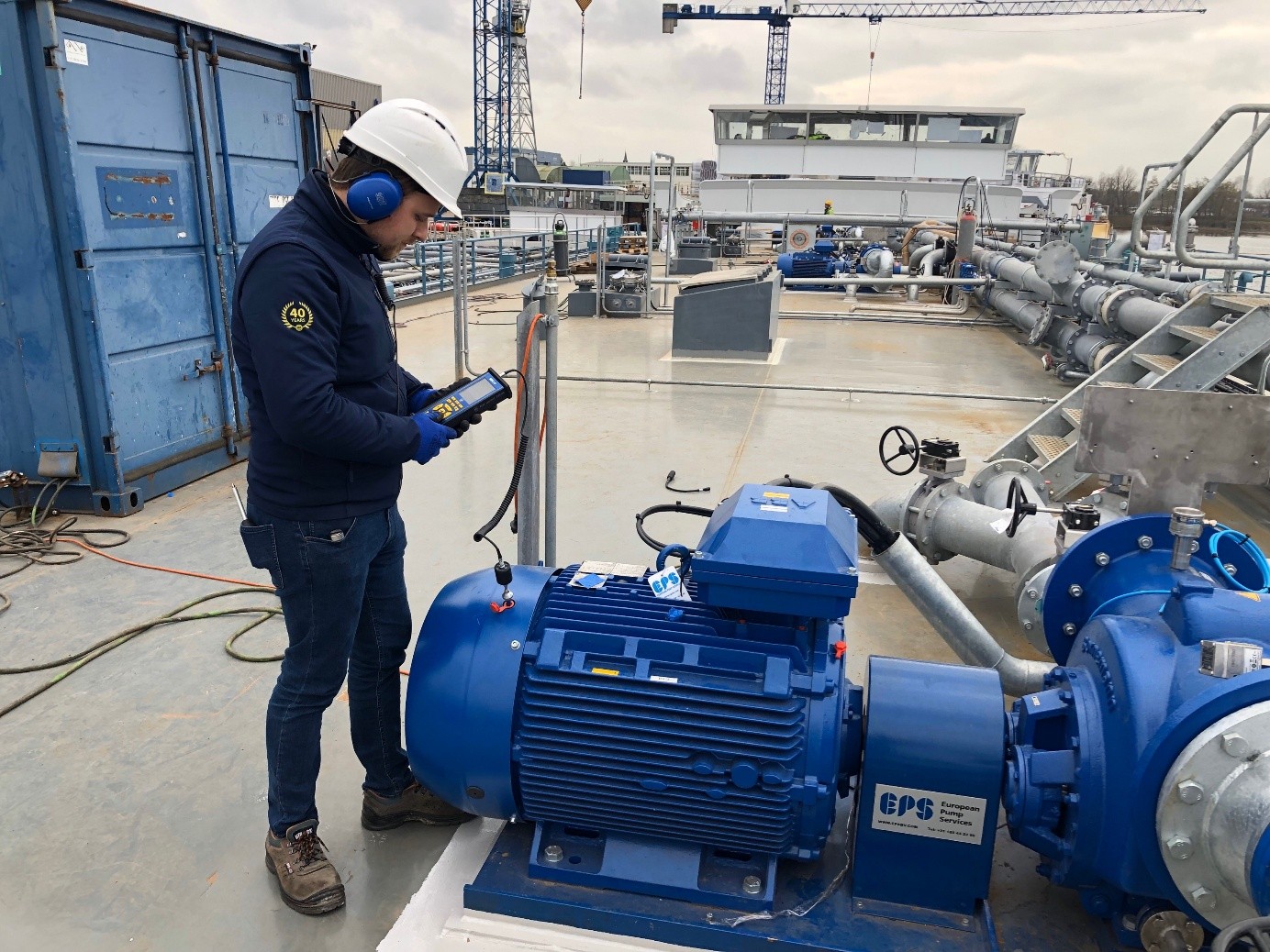
The SDT-IMCS training, led by Walter Vervloesem (IMCS) and reliability expert Haris Trobradovic (SDT), teaches you how to implement a new, cohesive strategy.
Attendees learn to take that little black and blue tool (the SDT340) and build a Condition Monitoring program that covers:
- Leak Detection: Finding pressurized or vacuum leaks in the engine room and cargo holds.
- Condition-based Lubrication: Transforming the high-risk task of greasing into a precise, measured process.
- Electrical Safety: Inspecting behind closed electrical cabinet doors for dangerous “cold” defects like partial discharge, which IR cameras often miss.
- Rotating Machinery: Successfully monitoring traditionally difficult assets like low-speed bearings and gearboxes.
This is how a ship moves from being managed by “planned maintenance” to running on “Condition-Based Maintenance”. The goal is to move beyond mere compliance to genuine Reliability, Availability, and Due Diligence.
If you are ready to stop guessing and start knowing, to change your ship’s story from risk to reliability, this is the training that provides the right tools.
Our other news
See all


Join the largest community of industrial suppliers
- Helping you with your ongoing technology watch
- Provide you with detailed supplier statistics
- Give you international visibility
Discover the largest catalogue of industrial products on the market
- To offer you the best catalogue of industrial products on the market
- To guarantee you a 100% secure platform
- Enable you to have live remote exchanges